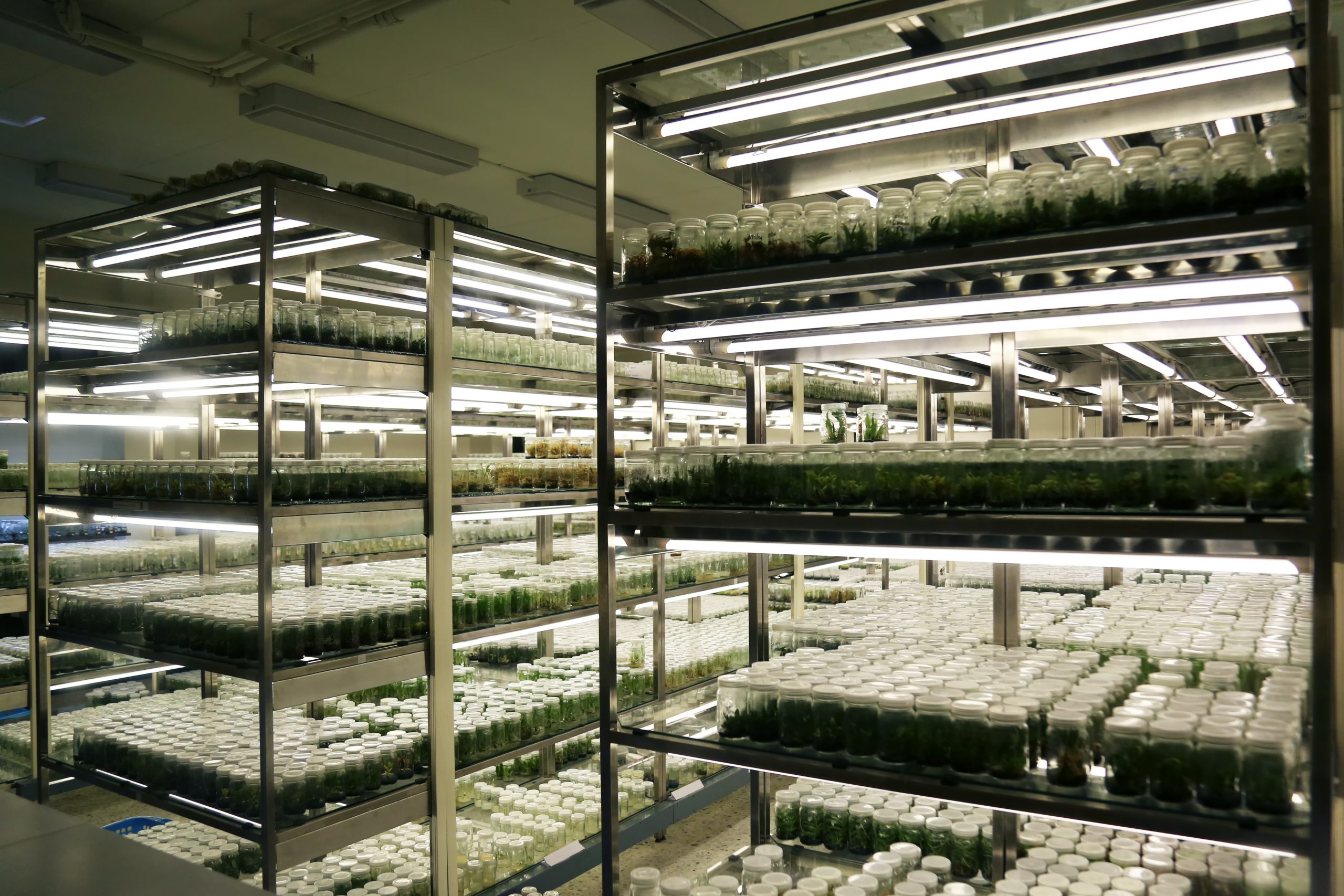
The hardening period — the transition of a tissue culture plant from its sterile lab environment to your garden or field — is the single most important phase in the plant’s early life. Get this right, and you have a vigorous, disease-free plant that establishes faster than conventionally grown stock. Get it wrong, and you may conclude that TC plants are fragile when in fact you were simply moving them too fast.
This guide covers the specific, step-by-step process — not theory, but what to actually do, day by day, in the Indian context.
Understanding Why Acclimatisation Is Necessary
In the lab, TC plants live in controlled perfection: humidity around 70–80%, temperature steady at 22–26°C, light gentle and consistent at 16 hours per day, no wind, no insects, no fungal spores in the air. Their leaves develop without the thick cuticle that outdoor plants form as protection against UV and water loss. Their stomata — tiny pores that regulate gas and water exchange — stay open because they never need to close defensively.
When you move that plant outdoors in India, everything changes at once. Humidity may drop to 50%. Temperature may swing 12–15°C between day and night. Direct sun delivers 10–20 times the light intensity the plant experienced in the lab. Wind causes rapid transpiration. All of this happens to a plant whose leaf structure isn’t built for it yet.
This isn’t a design flaw. It’s simply why a transition period exists. Give the plant two to three weeks to rebuild its surface structure, and it will be ready for whatever India throws at it.
Day 1: Opening the Box
Open the packaging promptly — don’t leave plants sealed in a hot courier box. Take them out carefully. TC plants typically arrive in small plug trays or individual pots with roots established in a clean, soilless substrate.
Do not repot immediately. Do not place them in direct sun. Do not water heavily.
What to do:
- Place the plants in a shaded location — a covered veranda, inside a bright room near a window, or under 50% shade cloth if outdoors.
- Mist the leaves gently with clean water (rainwater or RO water — never tap water for the first month).
- Leave them to breathe for the rest of the day.
Days 2–7: The Humidity Transition
The first week’s goal is slightly elevated humidity while the plants develop their outdoor leaf structure. In cooler months (October through February), Indian outdoor humidity is often sufficient. In dry months or drier inland cities, a humidity tent helps significantly.
A humidity tent is just a clear plastic bag or cut plastic bottle placed loosely over the plant — leave a small gap at the bottom for minimal airflow. Check plants daily and mist gently if the substrate is drying out.
Light during this week should be bright shade — good ambient light but no direct sun.
Signs that the first week is going well: leaves remaining upright and green, no significant wilting between mistings, new growth beginning at the growing point.
Days 7–14: Increasing Exposure
By the end of the first week, plants should be showing new growth — a sign the root system is active and the plant is no longer in transplant shock. This is when you begin increasing light exposure.
Move plants progressively into more light. If they were in open shade, move them to a spot with an hour or two of morning sun. If indoors near a window, move them to a covered outdoor area with good brightness.
At this stage, remove the humidity tent during the day and replace it at night or in the hottest part of the afternoon. You’re weaning the plant off artificial humidity support while its own surface structure builds up.
Water when the surface of the substrate begins to dry out, but don’t let it dry completely. The balance for most TC plants is moist but not waterlogged. Use clean water throughout.
Days 14–28: Field or Garden Transition
By the end of the second week, most TC plants are ready for their final planting location. New leaves will look and feel more like outdoor foliage — slightly thicker, sometimes with different sheen or colour compared to the lab leaves they arrived with. The lab leaves may yellow and drop — this is completely normal. The plant is replacing them with leaves suited to its new environment.
After 28 days from delivery, treat the plants exactly as you would any equivalent conventionally grown plant of the same species — because that’s effectively what they are, except cleaner.
Specific Notes for Common Species
Banana (Musa)
Banana TC plants establish quickly once in field soil. Acclimatise for 14 days before field planting, ensure the field is free-draining, and provide irrigation for the first month. Once established — usually by day 45–60 — TC banana grows at a pace that typically surprises growers used to conventional suckers.
Ornamentals (Anthurium, Orchids)
Ornamentals need the full 21-day acclimatisation period and benefit most from the humidity tent approach in their first week. Don’t rush them into direct sun.
Timber Species (Teak, Bamboo)
Harden for 14–21 days then plant directly into field conditions. They establish quickly and show significant height gain within two months of field planting.
What Not to Do
- Don’t use tap water in the first month — especially for ornamentals and carnivores.
- Don’t fertilise immediately — wait until the plant shows consistent new growth.
- Don’t panic if lower leaves yellow — this is normal lab-leaf senescence during transition.
- Don’t rush the sun exposure — leaf scorch in week one sets the plant back by two to three weeks.
The Result of Doing This Right
A TC plant properly acclimatised is not a fragile thing. It’s one of the most robust starts you can give a plant — disease-free, genetically authentic, with a root system that has never had to fight pathogens. The two to three weeks of patience at the beginning pays back consistently over the entire life of the plant.
Follow the steps above, trust the process, and by the end of the first month you’ll have a plant ready to perform at its full genetic potential — which, for most commercially grown species, is considerably more than conventionally propagated stock typically delivers.