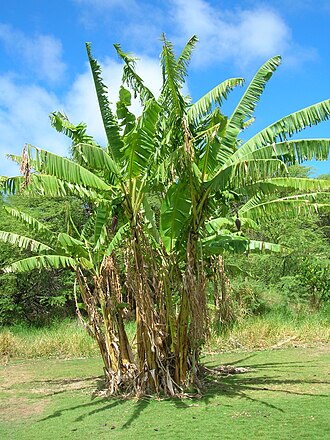
A tissue culture banana plant costs roughly ₹25–₹45 per plant, depending on the variety and supplier. A conventional sucker costs very little — often nothing if you have an existing crop. That price difference is real, and for a smallholder farmer managing margins carefully, it’s a legitimate question.
Is the extra cost worth it?
The short answer, based on ICAR data, Tamil Nadu Agricultural University research, and the experience of thousands of farmers across peninsular India who have made the switch, is: yes, and significantly so. But the reasons are specific, and they’re worth understanding clearly.
The Problem with Conventional Banana Suckers
Conventional banana propagation uses suckers — side shoots from an established plant’s rhizome. It’s free, it’s fast, and it’s worked for generations. But it carries a set of risks that have become increasingly serious as banana cultivation has intensified across India.
Disease transmission is the most significant. Banana bunchy top virus (BBTV), fusarium wilt (Panama disease), bacterial wilt, and nematode infestation can all be present in a sucker without visible symptoms at planting time. An infected sucker goes into the ground, completes its lifecycle while infecting the surrounding soil, and produces a harvest smaller than expected — leaving behind a field that’s harder to grow clean banana in for the next cycle.
BBTV spreads through suckers at a rate difficult to control once established. ICAR surveys have found BBTV infection in conventionally managed banana fields ranging from 15% to over 40% of plants, depending on the region and variety. Infected plants produce nothing. That’s 15–40% of your field producing no return on the land, water, and labour invested.
Genetic variability is the second issue. A sucker is technically a clone — but through multiple generations of vegetative propagation, accumulated mutations produce plants that deviate progressively from the original variety’s performance. In a conventionally managed farm, banana plants in the same field can show significant variation in bunch size, finger length, ripening time, and disease resistance — complicating harvest, post-harvest handling, and sale.
What TC Banana Changes
A tissue culture banana plant is propagated in sterile conditions from a meristem — the growing tip of a healthy, verified-clean mother plant. Every plant in a TC batch is genetically identical to that mother, which means:
- No BBTV, no fusarium, no bacterial wilt, no nematode load — the plant was never in soil during propagation. There’s nothing to transmit.
- Uniform growth — TC plants in the same batch emerge at the same height, flower at the same time, and produce bunches of equivalent size and quality. This uniformity is immediately visible in a TC-planted field and has significant practical implications for harvest scheduling and market timing.
- True to variety — a Grand Naine from a reputable TC source is the same Grand Naine that ICAR characterised and that buyers specify. No genetic drift, no rogue plants.
The Yield Numbers
TNAU and ICAR published trial data comparing TC Grand Naine with conventional suckers under identical management conditions:
- TC banana: average bunch weight 22–27 kg
- Conventional sucker: average bunch weight 16–21 kg
- TC banana first crop: arrives 11–13 months after planting
- Conventional sucker first crop: arrives 14–16 months after planting
The combination of higher bunch weight and a two to three month earlier harvest means TC fields produce more output in less time — a yield advantage that compounds over multiple ratoon cycles.
The Cost Calculation for a One-Acre Field
A standard planting density for Grand Naine is around 200–220 plants per acre at 2.5 × 1.8 metre spacing. At ₹35 per TC plant, the additional cost over conventional suckers (at ₹5 each) is approximately ₹6,000 per acre.
Against that investment:
- If TC plants produce bunches averaging 5 kg heavier, and the farm price is ₹20/kg, the additional value per acre (200 plants) is ₹20,000 — in the first crop alone.
- If the first harvest arrives two months earlier, one extra crop cycle becomes possible within a five-year rotation, adding ₹40,000–₹80,000 in cumulative value depending on variety and market.
- If disease incidence is reduced by even 10% — 20 plants saved from BBTV or fusarium loss — that’s 20 additional bunches at ₹400–₹500 per bunch: another ₹8,000–₹10,000.
The ₹6,000 additional input cost generates a return multiple of 5–10× in the first cycle for a well-managed field. This is not a marginal benefit — it’s a structural improvement in farm economics.
Government Support
TC banana isn’t just farmer-endorsed — it’s government policy. The National Horticulture Mission has supported TC banana distribution in Tamil Nadu, Andhra Pradesh, Maharashtra, Gujarat, and Karnataka. Several state governments have run subsidy schemes specifically for TC banana planting material, recognising the yield and disease benefits at a policy level.
ICAR’s National Research Centre for Banana in Trichy is one of the most authoritative sources of TC banana research in Asia, and their recommendations for commercial banana cultivation consistently specify TC planting material as the appropriate starting point for new plantings.
The Honest Caveats
- Acclimatisation matters — TC plants need a proper hardening period before field planting. The two-week hardening protocol is non-negotiable.
- Source quality matters — TC plants from a certified, accredited lab are a different product from plants from an uncertified facility with poor contamination control. Buy from suppliers who can provide clear sourcing information.
- Soil management still matters — TC plants start clean, but they go into your existing soil. The clean start gives them an advantage, but it doesn’t eliminate the need for good agronomic practice.
The Bottom Line
The additional cost of TC banana over conventional suckers is real, small relative to the total investment in a crop cycle, and returned many times over in yield advantage, earlier harvest, and reduced disease risk. The data supporting this is from Indian institutions, from Indian fields, under Indian conditions.
The farmers who have made the switch to TC banana don’t go back. That’s the most honest data point of all.