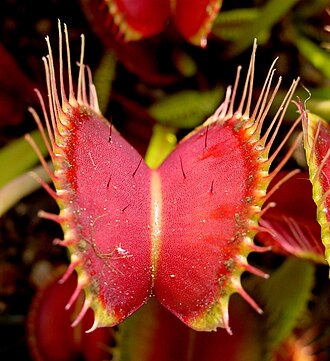
About Dionaea muscipula
The Venus Fly Trap is the world’s most famous carnivorous plant — and one of the most misunderstood. In the wild it grows in the nutrient-poor, boggy savannahs of North and South Carolina. Mimicking those conditions is the key to keeping it thriving.
Light
Full sun — minimum 4 hours of direct sun per day, ideally 6+. A south-facing windowsill or outdoor growing in summer is ideal. Under lights: 10,000–20,000 lux for 14 hr/day.
Temperature & Dormancy
Tolerates 0–35 °C. Dormancy is essential. In winter (Oct–Feb), allow the plant to experience cool temperatures (5–15 °C) and reduce watering. Skipping dormancy weakens the plant significantly over time.
Water
Only distilled, RO, or rainwater — zero exceptions. Tap water kills Dionaea within weeks. Use the tray method: keep 1–2 cm of water in a saucer at all times. During dormancy, keep just moist.
Potting Mix
Pure long-fibre sphagnum moss or 50:50 peat:perlite. No fertiliser, no compost, no added minerals.
Feeding
TC plantlets should not be fed for the first 2 months post-acclimatisation. Once established, offer 1–2 live or freshly killed insects per trap per month — no larger than 1/3 the trap size. Never feed meat or cheese.
Acclimatising Your TC Plantlet
Gradually introduce to higher light and lower humidity over 3–4 weeks from a humid propagator. Some trap deformation in the first flush of leaves after TC is normal — this resolves once the plant hardens.
Common Problems
- Black traps after touching: Traps that fire without prey are wasted. Each trap fires ~5 times before dying. Don’t trigger them for fun.
- Weak, floppy growth: Insufficient light.
- Crown rot: Water sitting on the crown. Always water from the tray, not above.